Pulse Jetters
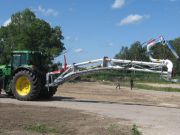
In the last decade NC have been at the forefront in the battle against environmental pollution. The new Super Pulse-Jet has revolutionised liquid slurry or dirty water disposal from farms, factories and processing plants.
Features and Benefits
Greatly limits manpower and heavy equipment needs. You can apply waste water/slurry while you do more important things.
Conventional manure handling is expensive and often requires two tractors with large quantities of fuel being used, along with endless man hours.
Field compaction is eliminated. Low compaction means healthier soil and improved crop growth.
Total nutrient management can significantly reduce commercial fertiliser requirement on specific crops. This nutrient management is now being driven by new EU regulations.
Waste water/slurry is applied at ultra low rates over longer periods, this greatly reduces worm kill and run off.
Low rate application allows continued nutrient use on a growing crop. If a crop is using nutrients during application, there is less chance of contaminating the surrounding ground water.
Reduces the need for large HP engines or electric motors – only requires 3Kw to 5.5 Kw motors depending on size of pump chosen. This will greatly reduce the energy cost required to spread waste water/slurry.
Odour reduction is accomplished when solids are digested in liquid form or separated for composting, leaving only waste water to be applied. By applying at low rates we enhance rapid microbiological breakdown in the soil; faster microbiological breakdown will help reduce lingering odour problems.
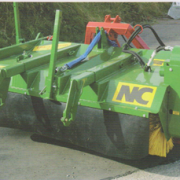
The NC Pulse-Jet is designed to work in conjunction with the NC Separator which separates the slurry/manure enabling the Pulse-Jet to apply the separated liquid slurry/manure unto the land ensuring all the benefits as listed above.
Specifications
We currently manufacture two models:
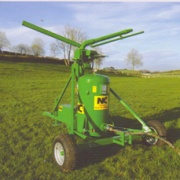
The conventional Pulser can be towed to the required position, where it can distribute liquid slurry or dirty water over 1.2 hectares from one spot, or the travelling model which is self-propelled by a reel system that covers 4.7 hectares in one run.